Editorial Portraits: How to Tell a Story in a Single Frame
October 11, 2026
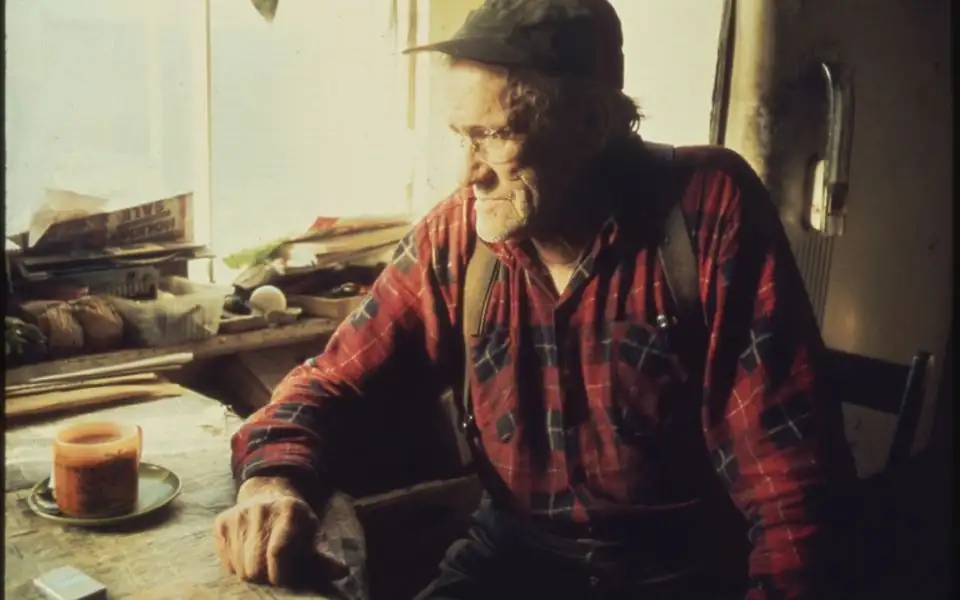
A headshot records a face. Editorial portraits try to say something about the person behind it, and they usually have one frame to do it. The term comes from magazines and newspapers, where a portrait sits beside a profile or feature and has to carry part of the story on its own. That job shapes every decision: the location, the light, what the person is holding, even whether they smile. If you've ever paused on a magazine portrait before reading the headline, you've seen the approach working.
What makes a portrait editorial
In print and online publications, editorial images work alongside the text: they can move the narrative forward, set the mood or tone of a piece, or stand in for an idea the article explores. A profile of a chef might show her at the pass during service, steam in the air and a ticket rail behind her. A piece on a retired union organizer might place him at his kitchen table among decades of files. In both cases the viewer learns something before reading a word.
Because of that, editorial portraits start from an idea, and the light, clothing, location and direction are chosen to serve it. Some lean towards reportage, quiet and observed; others borrow the styling of fashion photography. What they share is intent: every visible element is there for a reason.
Editorial, traditional and commercial portraits compared
Each type of photography answers a different question, and the differences are easier to see side by side.
| Traditional portrait | Editorial portrait | Commercial portrait | |
|---|---|---|---|
| Main purpose | Flattering record of a person or a stage of life | Tell part of a story about the person | Help a company or brand sell something |
| Who directs | Photographer and sitter | Editor's brief, photographer's concept | Client and agency |
| Typical use | Home, family, profile photo | Magazine, newspaper, website feature, personal project | Advertising, packaging, campaigns |
| Paperwork | Simple agreement | Permission to photograph; licensing for the publication | Model and property release forms, broad usage rights |
Usage is the practical line. Editorial photos generally illustrate news or features and are not repurposed for advertising. Commercial photography almost always requires signed releases from everyone recognizable in the frame, because the image is being used to sell. Anyone commissioning or sitting for a portrait should know which category it falls into, since that decides who can use the images later and how.
Who editorial portraits are for
The obvious clients are publications: a magazine commissioning a cover subject, a newspaper illustrating a profile, a university or arts organization telling the story of its people. But the editorial style has spread well beyond print. Authors, chefs, architects, founders and performers use it on their websites and in press kits because a picture with context says more than a plain background can.
Private clients book them too, often people who have never modelled and want a portrait with more thought behind it than a headshot. In those cases the photographer plays the role an editor would: shaping the idea, guiding the sitter and keeping the story in view. Done well, the session feels less like posing and more like a conversation.
How one frame carries a story
Photo essays usually rely on several kinds of image working together: a wide establishing shot of the place, a medium frame of the person at work, a close portrait and a detail such as hands or a tool. A single editorial portrait has to compress those layers into one picture. An editorial photographer does it with a few connected tools.
Setting
The environment is often the strongest piece of information. A workshop, a rink at dawn, a lab bench, a stage door: each tells the viewer what this person does and where they belong. The trick is selection. One meaningful background beats a cluttered one, and nothing should appear to grow out of the subject's head.
Objects and details
A single prop can carry a sentence of text. A violinist's case lined with old stickers, a farmer's work gloves, a stack of proofs on a typographer's desk. These details work best when they belong to the person rather than being brought in for the shoot, and capturing them in the same frame as the face is what ties them to a life.
Light and mood
Light decides how the story feels. Soft window light suggests calm and closeness; a hard single source can feel tense or heroic. Many editorial photographers carry a compact lighting kit so they are able to create the mood on location instead of relying on whatever the room offers.
Expression and gesture
Smiling is not always right for the story. A portrait accompanying a piece about grief, a difficult rescue or a long legal fight may need stillness instead. Small gestures, such as a hand resting on a tool or a glance away from the camera, often say more than a posed expression. The important part is that the gesture belongs to the person.
A Canadian example: Karsh and Churchill
Few portraits show the power of a single frame as clearly as Yousuf Karsh's 1941 photograph of Winston Churchill, made in Ottawa after Churchill addressed Canada's Parliament. According to The Canadian Encyclopedia, Karsh took the cigar out of Churchill's mouth just before pressing the shutter, provoking the scowl that became the image's defining feature. The picture appeared on the cover of LIFE in 1945 and came to stand for wartime defiance.
Nothing in the frame is complicated: one sitter, dramatic light, a dark background. The story lives entirely in expression and posture. Context does not always mean a busy location. Sometimes it is a single reaction, and the photographer's skill lies in being ready to capture it.
Planning an editorial portrait session
Most of the storytelling is decided before the shoot. When a publication commissions the work, the editor or photo editor provides a creative brief describing the story, the subject and the expected mood. The photographer then builds an approach within it, and the brief usually leaves some creative freedom to do so.
- Research the subject. Read their work, look at earlier photos, and ask what the story the images will accompany is really about.
- Build a mood board. Collect references for light, colour, wardrobe and framing so everyone on set shares the same picture.
- Scout or confirm the location. Check light at the planned time of day and what can be moved.
- Write a short shot list. Include one or two safe frames and one more ambitious idea.
- Sort the paperwork. Confirm permissions for private locations and, where needed, release forms and how the images will be licensed.
Even then, plans change. The person may be quieter or livelier than expected, or the light may vanish behind clouds. The ability to adapt without losing the thread is a large part of the craft, and it is what lets photographers create something better than the plan when the day turns out differently.
On the day: directing without staging
Location sessions often take place in a subject's home or workplace, sometimes in the middle of their working day, so the crew should keep a light footprint: move only what is necessary, put it back and stay within the agreed time. Conversation does more than any posing instruction, and it helps people feel at ease in front of the camera. NPR's training team, in its guidance on storytelling portraits, suggests asking people to stand, sit or turn in a certain direction but not to do anything they would not normally do, and to shoot during natural pauses rather than mid-sentence.
That balance is what separates editorial work from staged advertising. The photographer shapes the frame, yet the moment has to feel true. A staged action reads as false almost immediately, and once a viewer senses it, even a compelling story loses its hold.
Editing with a light hand
Post-processing matters, but it serves the story rather than replacing it. Most editorial photography passes through editing software like Adobe Lightroom or similar tools to balance colour, contrast and tone, remove small distractions and give a set of editorial images a consistent palette. Heavy retouching works against the truthfulness readers expect, and many publications set their own limits on how far an image can be altered.
Fashion work follows different rules. Fashion editorials often run as multi-page spreads with little text, and there photographers and stylists treat polish as part of the message. Portraits that sit beside reporting tend to stay closer to what the camera saw.
Choosing the right photographer
For anyone entering the world of editorial photography as a sitter or a client, the portfolio is the best guide. Look for portraits where you learn something about the subject without a caption, and where the photographer's style still leaves room for the person. Ask the photographer how they approach research, whether they shoot on location, and how the final images will be licensed. The camera and lenses matter far less than that focus on one person and one story.