Camera-Shy? How to Pose for Photos Without Feeling Stiff
October 15, 2026
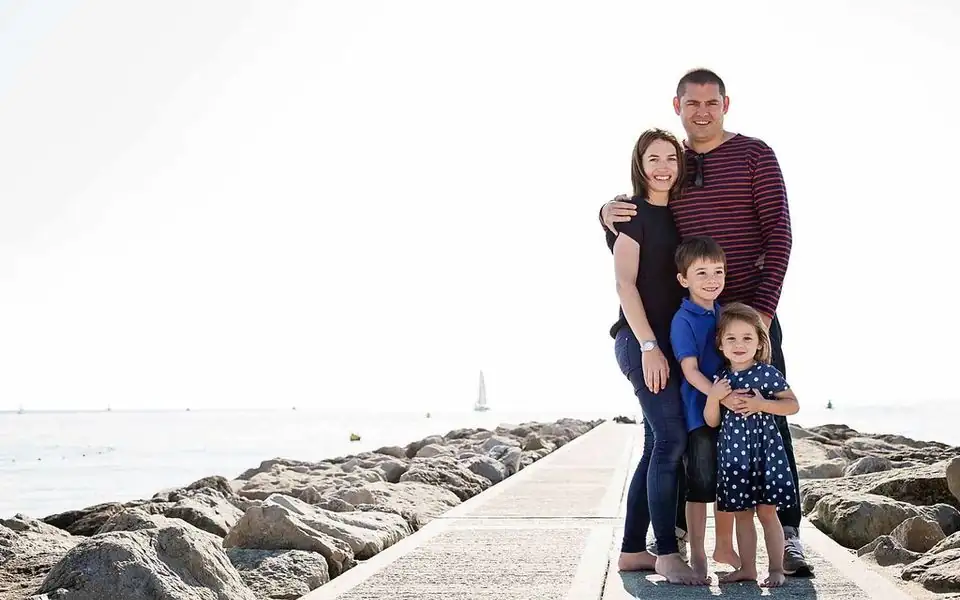
Feeling stiff in front of a lens is common, and it has less to do with looks than with not knowing what to do for the few seconds the shutter is open. Learning how to pose for photos is mostly about removing those decisions in advance: where your weight goes, what your arms are doing, where you look. Once the body has a plan, the face usually relaxes on its own. The posing tips below work for a headshot session, a family portrait in the park or a quick picture at a friend's wedding, and none of them requires model training.
Why the camera makes people tense
Many people hold their breath, square up to the lens and freeze, which is exactly what makes a photo look posed in the bad sense. The muscles around the jaw, neck and fingers tighten first, and the camera picks that up instantly. Knowing this is useful, because it means the fix is physical rather than a matter of confidence. A few small changes in posture do more than any amount of telling yourself to relax. Slow breathing helps too: a simple breathing exercise for stress from the NHS, breathing in for a count of five and out for five, is easy to do while the photographer sets up.
How to pose for photos: start with the body, not the smile
A handful of adjustments make almost anyone look more at ease:
- Turn slightly. Instead of facing the lens straight on, angle yourself about a quarter turn and then bring your face back toward the camera. Square shoulders look wide and formal; a slight turn adds shape.
- Shift your weight. Let one hip carry most of your weight and keep the other leg in front with the knee slightly bent, so the body settles into a gentle curve instead of a straight column. Straight, locked legs are one of the quickest ways to look rigid.
- Lengthen, then let go. Good posture means a long neck and lowered shoulders, not a military stance. Take a breath in, stand tall, and breathe out without collapsing.
- Bring the face forward a touch. Many people pull their head back when they feel watched, which can create a double chin. Moving the head slightly forward, not up, defines the jaw. It feels odd but looks natural.
None of these tips needs to be exaggerated. In most pictures the difference between stiff and comfortable comes down to a few centimetres.
Giving your hands a job
Hands are where an awkward feeling shows first. Arms pressed flat against the sides make the torso look wider and tense, so leave a small gap between arm and waist. After that, find something for the fingers to do. Holding a coffee cup or the strap of a bag, resting a hand on the back of a chair or tucking a thumb into a pocket are all simple choices. In a seated pose, the hands can rest loosely on a knee or the arm of a chair.
Keep the fingers relaxed and show the side of the hand rather than a flat palm or a tight fist, both of which pull focus away from the face. If you naturally fold your arms, keep the fold loose and the fingers in view; arms clamped against the chest can appear closed off.
A relaxed face and a real expression
Forced smiles happen when people hold an expression for too long while the photographer adjusts settings. A better approach is to look away from the camera, take a breath, and turn back towards the camera just before the shot. That brief reset keeps the eyes alive. Thinking about a specific person or a recent conversation you enjoyed also helps more than thinking about smiling.
A smile is not required for every frame. A calm, closed-mouth expression with engaged eyes often works better for a professional headshot, while an open laugh suits family and event pictures. Ask the photographer which the images need, and you'll spend less energy guessing.
Lean, sit or keep moving
Standing in the open with nothing to do is the hardest posing option for a nervous subject. Give yourself a reason to be where you are; most people feel calmer with something to lean on. Leaning against a wall or a railing, sitting on steps with the forearms on the knees, or perching on the edge of a table all create natural angles.
Movement is even easier. Walking slowly toward the photographer, turning to look back over a shoulder, adjusting a sleeve or a scarf, or simply shifting from one foot to the other lets the camera capture movement instead of a frozen pose. It also helps to ask the photographer to keep taking pictures as you move, so you never hold one position long enough to stiffen.
Canadian weather plays a part here. On a cold day outdoors, people hunch and clench their jaw without noticing. A few cold-weather tips: keep a warm coat on until the last moment, shake out your hands, and take a few deep breaths before each set of frames.
Work with the photographer
A good photographer directs posing, and saying you feel uncomfortable at the start is useful information, not a confession. Share what the pictures are for and how you want to come across; most photographers have their own tips for nervous subjects. Ask to see a photo on the camera's screen early in the session: seeing that a pose works is one of the fastest ways to stop worrying about it. If something feels wrong, say so, and try a different version rather than pushing through. Posing for group photos follows the same ideas: angle toward the centre, keep a little space under each elbow, and avoid standing perfectly straight at the end of a row.
Practise a little before the day
Ten minutes in front of a mirror or a phone is enough to work out how to pose for pictures in a way that suits you. Try the posing basics above: the quarter turn, the weight shift and two or three hand positions, and record a short video as you switch between them. Pause it on the frames you like and note which angle you prefer; many people find they favour one side. A photo taken this way will not be perfect, and it does not need to be. The point is to arrive with a few poses your body already knows, so you feel at home in the session rather than tested.
Afterwards, the photos from the shoot will show which poses to keep. Make a note of them, and next time you'll know how to pose for photos without thinking about it, whether the pictures end up on Instagram, a company website or the family wall.