What to Wear for Headshots: A Professional Guide to Colours, Fabrics and Fit
October 9, 2026
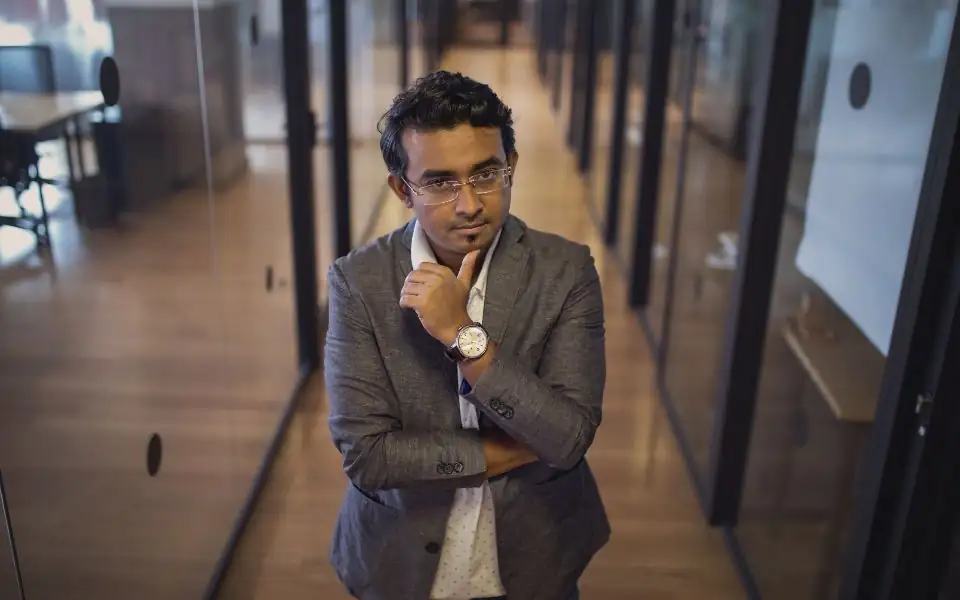
Clothing takes up only a small part of the frame, yet it shapes how a viewer reads the person above it. Working out what to wear for headshots means thinking about three things in order: where the photos will be used, which colours and fabrics hold up under studio light, and how well each piece fits when you sit and turn. Get those right and the outfit disappears, which is exactly the goal. You stay the subject, and the clothes simply confirm the impression you give.
Start with where the headshot will live
A headshot for a law firm's website, a startup's team page and an actor's casting profile do different jobs, so the clothes should follow the job. Before you choose anything, list the places the photos will appear: LinkedIn, a company site, a conference program, a book jacket, an agency page, a set of personal branding photos for your own business. The most formal of those uses sets the minimum: a photo that has to work on a conference program and a casual team page should be dressed for the program.
This is where personal brand comes in, a phrase that sounds grander than it is. It simply means the clothes should match how colleagues and clients already know you. A financial adviser known for a calm, traditional manner gains little from a statement jacket. A designer whose work is bold can show that personality with one strong colour or an unusual cut. The aim is a polished version of yourself, so the headshot feels like you on a good day rather than a costume.
Dressing for your industry
Clothing helps viewers place you in a profession, and every industry has its own unwritten dress code. There is no perfect attire that works everywhere, so treat these as starting points:
- Corporate, legal and finance. On Bay Street and in similar offices, a dark suit or tailored blazer is still the norm for corporate headshots. Men often wear a collared shirt with or without a tie; women often choose a blazer over a simple top or a structured dress in muted tones.
- Tech and startups. Smart casual: a well-fitted shirt, fine-knit sweater or plain top, sometimes under an unstructured jacket. Approachable matters more than formal here.
- Creative fields. More room for personality through colour, texture or one distinctive accessory, as long as your expression still leads.
- Health and wellness. Soft neutrals and natural fabrics usually read as calm and approachable, which suits a practice whose brand rests on trust.
- Actors. Plain pieces that hint at the roles you are submitted for. Avoid anything that reads as a costume, such as a uniform or a period jacket.
Whatever the field, aim for what you would wear on the most important workday of your year, not to a wedding or a weekend errand. That is the professional image people will expect when they meet you.
Colours that photograph well
Solid, mid-range colours are the safest choice for professional headshots. Navy, charcoal, slate blue, forest green, burgundy and earth tones such as rust or olive keep attention on your face and sit well against most complexions. Soft neutral tones like taupe or stone also work, provided they do not match your skin tone too closely. When clothing and skin blend together, the line of the neck and shoulders disappears and you can look washed out.
Bright neon shades are a different problem. Strong saturated colour bounces onto the skin under flash and leaves unnatural tints on the chin and neck that are tedious to correct. Very bright colours also pull the eye down to the chest, which is distracting in a tight crop.
If your company has an established palette, one subtle nod to it in a shirt or scarf ties the headshot to the brand identity without turning you into a logo. For team photos, agreeing on two or three shared tones keeps a website gallery consistent.
Should you wear black or white?
Both are harder than they look, because the camera has to hold detail in your face and clothes at once, and pure black and white sit at the extremes of that range. If you wear black, folds and seams can vanish into a flat shape, especially against a dark backdrop; a fabric with visible texture and a lighter background help. White clothing becomes the lightest area in the headshot and bounces light up under the chin, so off-white, cream or light grey usually photograph more kindly. The same contrast logic applies to the backdrop in general, so ask your photographer what colour it will be before the headshot session.
Fabrics, texture and patterns
Fabric is where many otherwise good outfits go wrong. Matte materials such as wool, cotton twill, knitwear and brushed blends absorb light evenly. Avoid satin, sheen finishes and some synthetics, which create hot spots and glare under studio lighting and show every crease.
Texture can help, though. A fine knit, a tweed jacket or a linen-cotton shirt adds depth that a flat fabric cannot. What causes trouble is pattern at a small scale: tight stripes, small checks and herringbone can produce moiré, a shimmering ripple that appears in digital images and is hard to remove. Simple patterns at a larger scale are usually fine, but avoid busy patterns altogether if you are unsure, along with large logos and printed text.
Thin fabrics need one more check. Strong studio light can show through pale, lightweight shirts, so photograph the outfit with your phone by a window in natural light first, and avoid shirts that turn see-through.
Fit, necklines and comfort
A polished result depends more on fit than on price. A jacket that is slightly too big makes the shoulders look sloped, and a shirt that pulls across the buttons shows gaps in a close crop. If a favourite piece is almost right, a tailor can usually fix sleeve length or waist suppression within a week or two.
Necklines frame the face, so they deserve attention. V-necks and open collars lengthen the neck; crew necks and simple boat necks suit most people; very high or very low necklines are harder to crop well. Sleeves should reach at least the elbow if the shot may go down to the waist, because bare upper arms tend to dominate the photos.
Comfort is the final test. Choose clothing that lets you sit, cross your arms and turn your shoulders freely. If you feel uncomfortable, that tension shows in the jaw and neck and the expression looks less natural, however good the piece looks on the hanger. Avoid anything new you will keep adjusting; it is better to wear something familiar and well cut.
Layers, glasses and accessories
Layers give you two or three looks from one core outfit. A blazer over a knit, then the knit alone, then an open shirt collar gives the photographer variety without a full change of clothing.
Keep accessories small. Simple earrings, a thin chain or a classic watch are fine. A large pendant or stacked bracelets compete with your face in a tight crop, and a lit smart-watch screen shows up as a distracting spot in the photos. Ties and scarves should complement the outfit without overpowering it.
If you normally wear glasses, wear glasses in the headshot too, since people will expect to see them. Anti-reflective lenses reduce glare, and an experienced photographer can angle lights to keep reflections off the lenses. Tilting the frames very slightly downward at the ears is another common studio fix for reflections.
Bring options and prepare them
Bring multiple outfits even if you have a favourite. A colour that seems neutral at home can turn out too close to the backdrop or your skin tone once the lights are set, and bringing multiple outfit options means the outfit choices can be made on the first test frames, not in the bedroom mirror. Two or three tops in different colours, one jacket and one alternative layer is a sensible minimum, whether the session is a brand photo shoot or a single professional headshot.
- Iron or steam everything the day before, and carry clothes on hangers in a garment bag.
- Pro tip: bring a small travel steamer and a lint roller. Wool coats, pet hair and Canadian winter static all leave marks that show in a close-up.
- Arrive in other clothes and change at the studio, especially for a late-day shoot.
- In winter, leave salt-stained boots by the door if the shoot may include full-length frames, and pack clean shoes.
- Pro tip: think about the one outfit you would keep if the session ran short, and put it on first.
Hair and makeup should match the clothes in tone. A sharp tailored jacket suits sleek, structured hair; a soft knit suits a looser style. Matte foundation and powder handle studio shine better than glossy or shimmering products, and a light, natural base helps on camera for anyone, including people who do not normally wear makeup.
Quick answers to common questions
Can I wear casual clothes?
Yes, if casual is how your industry dresses and it fits your brand. A plain, well-fitted T-shirt under an unlined jacket can look polished; a faded hoodie will not.
How many outfits should I bring?
Most people need two or three looks, and several options in reserve give room to adjust. Ask the photographer how many changes fit into the session and how many final headshots are included.
What about shoes?
They only matter if the photos go to full length. For a standard head-and-shoulders crop, wear whatever keeps you comfortable while sitting and standing.
This is not a complete guide to every dress code, but the practical answer to what to wear for headshots is short: solid, mid-tone colours, matte fabrics that fit, and minimal extras that keep the focus on your personal brand rather than the clothes. If you are still choosing who will take your professional headshots, the Canadian Association of Professional Image Creators, a national body with chapters in Toronto, Montreal and Vancouver, is one place to start looking.